


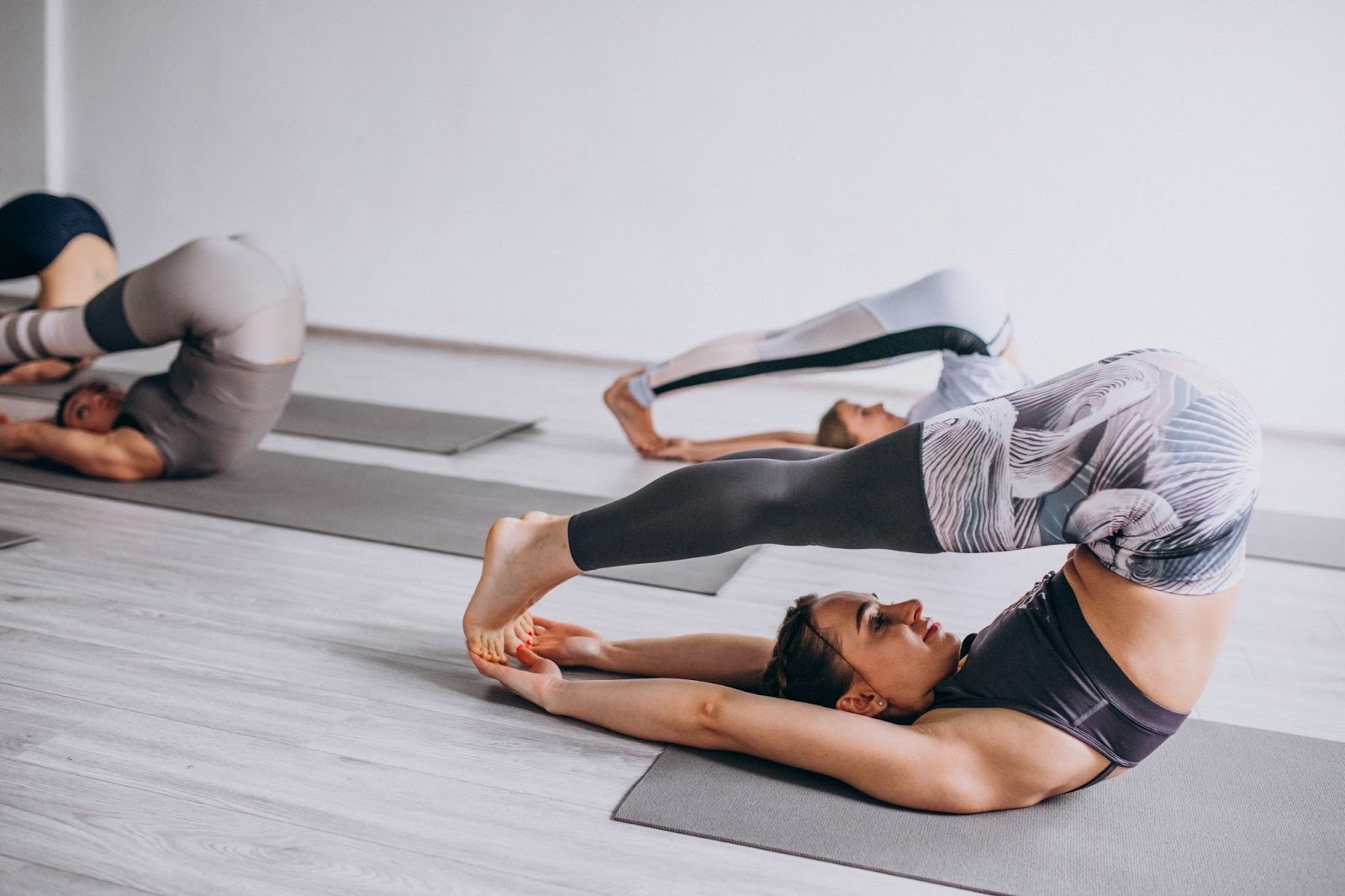
Alignment is one of those words that gets thrown around a lot in yoga classes without much explanation. At its core, it just means keeping your body safe while you practice. Students at every level repeat the same handful of mistakes, and most of the time, it comes down to habit rather than not caring. If you are getting ready for a Bali yoga teacher training course, knowing these now will save you a lot of time once you are in the room.
The Front Knee Caving In During Warrior Poses
Warrior I and Warrior II show up in almost every class, so their common mistakes show up just as often. The front knee rolling inward is the one that teachers correct most. It usually happens when the outer hip isn’t switched on, or when someone gets tired and stops paying attention to the lower body.
The correction is simple but takes repetition. Push the front knee toward the little toe side of the foot. Keep it stacked over the ankle, not drifting past it. Teachers who have been through a Yoga Alliance-certified yoga teacher training in Bali tend to spot this quickly because it’s one of the first things covered in any solid training program.
Squashing the Lower Back in Backbends
Cobra, Camel, Upward Dog. These are all poses where students compress the lower back instead of spreading the curve through the whole spine. It feels like a deeper bend, but it’s really just putting load on the same few vertebrae every time.
Before you go into the bend, try to get a little length in the spine first. Press through the legs, keep the belly from going totally soft, and lead with the chest going up rather than the lower back going in. Students at the best yoga teacher training programs in Bali spend real time on this because the habit is stubborn.
Rounding the Back in Forward Folds
Forward folds look simple, but most people do them in a way that misses the point entirely. When the back rounds heavily and the pelvis tucks under, the stretch ends up in the lower back instead of the hamstrings, where it belongs.
Bending the knees enough to let the pelvis tip forward is usually all it takes. A flat back with a hinge at the hips gets the stretch to the right place. Most students say that once they actually feel how different it is, they wonder how they practised the other way for so long. This is something that gets addressed a lot in a yoga teacher training program in Bali for beginners.
Straining the Neck in Downward Dog
Downward Dog is one of the most practiced poses in yoga and one of the most misaligned. Many students look up toward their hands, which shortens the neck and builds tension in the shoulders. Some people also grip their knees straight and stiff, which pulls the hips down and takes the length out of the back.
Let the neck go loose and look somewhere between your knees and your feet, wherever feels natural. Softening the knees slightly usually helps the hips shift back, and the spine lengthen. In an intensive yoga teacher training Bali setting, this pose gets real attention because it shows up in almost every flow, and small fixes add up over time.
Pushing the Ribs Forward in Standing Poses
A lot of students do this without realizing it. They want to stand tall, so they push the chest out, and the ribs follow. It looks like good posture, but the body isn’t stacked properly. This shows up a lot in Mountain Pose and Tree Pose.
Softening the front ribs down while still lifting through the chest keeps everything properly lined up. It’s a small shift, but it changes how stable you feel in the pose. Students in a Bali yoga teacher training for beginners often find this tricky at first because it feels like the opposite of standing up straight.
It’s About Staying on the Mat for Years, Not Looking Perfect
The goal was never to look good in a pose. It’s still to be practicing five, ten, twenty years from now without your knees or back paying the price. Good alignment is what makes that possible.
That’s why the best yoga teacher training programs in Bali spend so much time here. Once you understand the reason behind each correction, alignment stops feeling like a checklist. It starts to feel obvious. And that’s when both your practice and your teaching genuinely move forward.
