


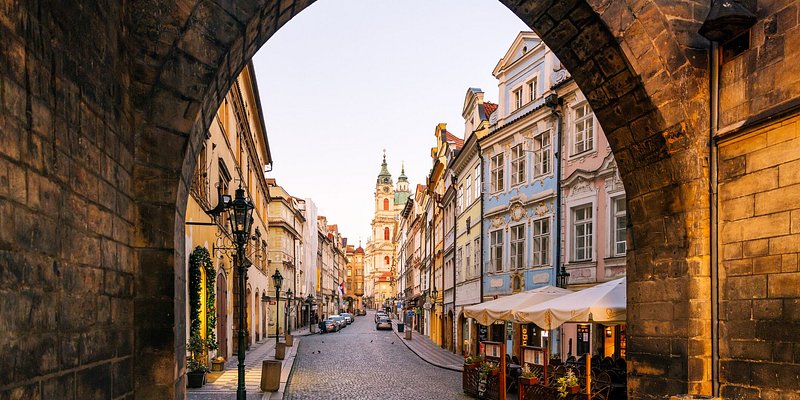
Prague is one of those cities that does not need a long introduction. It works through space, rhythm, and perspective. On a first walk, the city reveals a structure that feels coherent: bridges connect not only riverbanks but also historical layers, public squares open like stages, and hills create natural viewing points that explain how the city grew. That is why Prague often makes a strong first impression not through isolated attractions, but through the way its parts connect into one readable urban story.
For a traveler who wants to understand rather than simply collect photos, Prague is best explored on foot, and even a route planned around practical tools or pauses online, such as the chicken road app, does not distract from the main point: this city rewards attention to sequence, scale, and movement. The right walk is not about covering everything. It is about seeing how one place leads naturally into the next.
Why Prague Works So Well for a First Visit
The main strength of Prague lies in concentration. Many of its most important sites sit within a relatively compact area, and this allows a visitor to grasp the city without constant transport or fragmented planning. The Vltava River acts as a visual axis. The Old Town, Lesser Town, Castle District, and New Town each have a distinct function and character, but they remain connected enough to form one continuous route.
Another reason Prague is easy to appreciate is that the city offers both detail and overview. At street level, you notice passageways, courtyards, facades, and staircases. From above, you understand the urban logic: bridges, church towers, red roofs, and the relation between flat central areas and the rising edges around them. This shift between close observation and wide perspective is central to the Prague experience.
Start with the Old Town, but Read It Carefully
Most first walks begin in the Old Town, and that makes sense. This is where Prague presents some of its most recognizable urban spaces. Old Town Square is not important only because it is famous. It matters because it shows how public life, commerce, religion, and political history once met in a single place. The square is open enough to feel ceremonial, yet enclosed enough to remain human in scale.
From there, it is worth moving slowly through the surrounding streets instead of rushing from one landmark to another. The value of this area lies in its texture. Short streets change direction, narrow lanes open into small courts, and the density of buildings creates a sense of discovery. This part of Prague teaches an important lesson: the city should not be consumed only through major monuments. Its smaller transitions are part of the attraction.
The Astronomical Clock may draw a crowd, but the real analytical interest of the Old Town lies in how medieval patterns still shape modern movement. Streets are not arranged for efficiency in the modern sense. They guide you through a city that evolved over time, and this layered structure remains legible today.
Cross Charles Bridge, but Do It with Purpose
Charles Bridge is more than a route between two tourist zones. It is one of the city’s strongest symbolic and spatial connectors. When crossing it, the experience depends on direction and timing. Walking from the Old Town toward the Lesser Town often works best because the gradual approach to the castle side creates anticipation and a clear visual destination.
Still, the bridge is not only about views. It also teaches how Prague uses elevation. On one side, the Old Town appears dense and horizontal. On the other, the land rises, and the castle complex begins to dominate the skyline. This difference gives the crossing real narrative force. You are not simply moving across water; you are moving between two different urban conditions.
Early morning or later evening are the best times to understand the bridge properly. When the flow of people is thinner, the proportions become clearer, and the surrounding city reads as more than a backdrop.
Explore the Lesser Town and Climb Toward the Castle
Once across the bridge, the Lesser Town offers a slower pace. Its streets are calmer, and the district feels more residential in parts, though still historically dense. This area works well because it softens the transition from busy central spaces to the elevated power center of the city.
The route upward toward Prague Castle should not be treated as a single destination march. The climb matters. Stairways, sloping lanes, and shifting viewpoints create a gradual reveal. By the time you reach the castle area, you have already experienced the geography that helped shape Prague’s political and symbolic hierarchy.
Prague Castle itself is best approached as a complex rather than a single monument. Courtyards, churches, administrative buildings, and viewing terraces combine to show how authority was built into the landscape. Even for visitors who are not deeply interested in political history, the site explains the city’s structure with unusual clarity.
Do Not Skip the Viewpoints and the River Edges
Many first-time visitors focus only on central landmarks, but Prague becomes more understandable when seen from above and from the riverbanks. Letná Park provides one of the clearest panoramic readings of the city. From there, the bridges line up in sequence, and the relationship between the historic center and the river becomes obvious.
Petrin Hill offers a different effect. It is less about reading the city as infrastructure and more about feeling distance, slope, and scale. The climb creates separation from the center, which makes the return more meaningful.
The river edges also deserve time. Walking alongside the Vltava shows Prague from its most balanced angle. Facades, embankments, bridges, and hills appear together, and the city’s visual order becomes easier to grasp than in the crowded interior streets.
What You Should Not Miss on a First Trip
A strong first Prague route should include five essentials: Old Town Square, the surrounding medieval streets, Charles Bridge, the Lesser Town with its uphill transition, and the castle viewpoints. If time allows, add one panoramic stop and one riverside walk. This combination gives not just famous images, but a working understanding of the city.
Prague leaves a lasting impression because it is both beautiful and legible. It invites emotion, but it also rewards analysis. On a first walk, that balance becomes clear. You do not fall for Prague only because it looks good. You fall for it because it reveals itself step by step, and each step makes the next one feel inevitable.
