


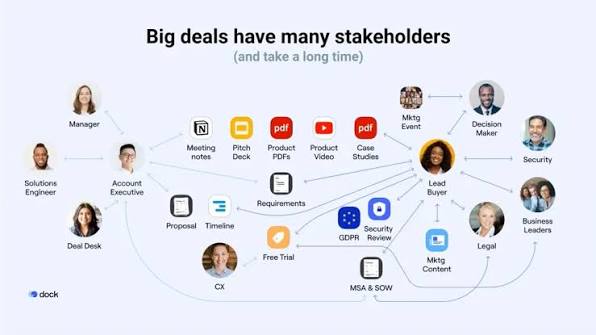
Selling into large organizations has always been a marathon rather than a dash. Contracts above $500K often take more than nine months, with many decision makers, procurement gates, security reviews, and bake-offs that wear down even experienced teams. The pattern has changed, though. SaaS groups that win enterprise business more quickly are not simply grinding longer hours or adding headcount. They arrive at every discussion already clear on what the buyer actually needs.
That clarity begins with knowing which technologies a prospect already runs.
Why Tech Stack Intelligence Changes the Conversation
If a seller joins a discovery call already aware that the account uses a rival analytics product, a CRM that is more than a decade old, and several payment systems that never integrate, the entire tone of the meeting shifts. Rather than burning forty minutes on shallow qualification, the rep can start with a specific remark about the waste that stack produces and immediately look like someone who grasps the real issue.
That idea sits at the heart of using tech stack intelligence in sales. It recasts the seller as an advisor instead of a vendor before a meeting is even on the calendar.
Enterprise buyers have heard hundreds of pitches. They notice preparation, concrete detail, and proof that you understand their environment. Generic positioning plus a stock deck is a fast path to being ignored in a crowded inbox.
How Teams Are Building These Signals Into Their Prospecting
The operational question is how teams collect this insight at volume. Clicking through sites and guessing at the stack is not a process. They need structured data they can use.
A method that has caught on is folding website technology detection into prospecting. Products that inspect domains and return organized facts about platforms, frameworks, analytics, and payment tools give sellers a usable first cut. An integration-middleware vendor, for instance, can narrow a list to firms running two platforms they already connect natively, then write outbound around that pairing. Compared with a bland cold email, the relevance is not a small lift. It is night and day.
ScraperCity’s builtwith scraper is one resource sales teams have found useful here, allowing them to query technology data across websites at scale and filter prospecting lists by specific tools. For groups assembling accounts in a sector where stack mix is a strong buying cue, that filtering reshapes the top of the funnel completely.
Qualification Gets Sharper When You Already Know the Stack
MEDDIC and similar models dominate enterprise SaaS qualification for a reason. Even those frameworks work better when the seller already has context. If you suspect the economic buyer is unhappy with the data warehouse because three tools sit disconnected, you have a hypothesis to test before the first call. That hypothesis produces better questions and uncovers real pain sooner.
Stack signals also inform timing. An account that just migrated CRMs is unlikely to tear out sales systems again. One still on a ten-year-old stack may already be evaluating. Interpreting those cues well lets teams spend effort on accounts that are actually in market instead of accounts they merely wish to sell.
The Outreach Layer Still Matters
Insight only pays off if it becomes outreach that lands with the right people. Precise targeting still fails when sequences sound generic or cadence timing is wrong. Investment in data should be matched by investment in messaging.
Teams designing prospecting workflows benefit from studying what actually works in cold outreach and structured sequences. Resources focused on sales prospecting tools and outreach strategy can help reps think through cadence structure, channel mix, and how to translate account intelligence into messages that actually get replies.
Speed Comes from Removing Friction, Not Adding Pressure
Enterprise teams that close faster are not running harsher playbooks. They strip out the drag at each stage. Discovery shortens because the tech environment is already known. Qualification tightens because hypotheses exist on day one. Proposals fit better because the problem is understood before a solution is presented.
Tech stack intelligence is not a cheat code. It is a prep layer that makes every later step more effective. When a seller knows more about a prospect’s infrastructure than the prospect expected, the relationship itself changes. The rep becomes someone worth a conversation rather than someone to be managed.
With buyers busier, more skeptical, and better informed than before, that difference often decides whether a deal closes or sits forever in legal. SaaS teams that put stack intelligence at the front of the process do not only win faster. They win stronger deals with less wasted motion.