


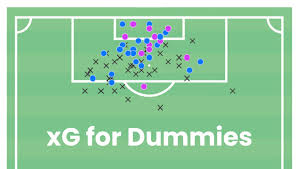
The Thai title focuses on the mirror image of xG underperformance: Serie A 2021/2022 teams that generated relatively modest expected goals yet converted chances at an unusually high rate. Statistically, these are “overperformers,” with goals significantly above xG, and they pose a different challenge from wasteful sides—here the question is whether sharp finishing reflects genuine sustainable quality or a hot streak that is likely to cool, dragging results back toward underlying chance creation.
Why Low xG with High Goals Signals Overperformance Risk
Expected goals allows you to separate how many good chances a team produced from how many goals happened to go in. If a club maintains average or below-average xG but finishes far more of its shots than the model predicts, its goal tally will sit well above its xG total. In the short run, that looks like precision finishing; in the medium run, it is usually a sign that outcomes have run ahead of underlying process.
Analytical and betting-focused discussions emphasise that overperformance on xG—goals minus xG being strongly positive—is often less stable than the opposite pattern. Because football is low-scoring, a cluster of long-range goals, deflections and perfectly placed shots can make an attack appear far more efficient than it truly is. Over long samples, most teams’ goal totals and xG converge, so when goals consistently exceed xG by a large margin, you have to assume some regression risk unless there is compelling evidence of exceptional finishing talent across several seasons.
How xG Overperformance Typically Appears in Data
xG tables list each team’s xG and xGA per match, along with their actual goals for and against, making it straightforward to compute overperformance by subtracting xG from goals. In many seasons and leagues, analysts find that a few clubs sit with substantial positive gaps—scoring many more than expected for the quality of their shots—while others sit with negative gaps. Even when complete 2021/22 Serie A overperformance rankings are not public, the pattern is consistent: some sides combine low or middling chance creation numbers with impressive finishing, sitting on the “too good to last” side of xG.
Case studies from other competitions illustrate the same idea. For example, xG-based alternative tables have highlighted teams whose goal tally exceeds xG by 8–10 goals over partial seasons, driven by conversion of low-probability shots and a high proportion of finishes that go into extreme corners. That kind of gap is hard to maintain indefinitely. It often narrows in the second half of the season, with results cooling once finishing normalises or when opponents adjust their defensive setups.
Mechanisms That Create Low-xG, High-Goals Profiles
Several mechanisms can propel a team into a low‑xG, high‑goals state. One is a run of outstanding shot-stopping and finishing at both ends: attackers find corners, while the defence and goalkeeper restrict opponents to fewer high-xG attempts, boosting the team’s net goal difference even without generating many chances. Another is stylistic: clubs that lean heavily on counter-attacks and transitional play may take relatively few shots but from situations where the xG model underestimates actual finishing ease, at least in the short term, due to unmeasured context like specific defender positioning.
There is also the pure variance component. Because xG models treat each shot as a probability draw, a team taking many low-xG attempts can, by chance, see a disproportionate number fly in over a 10–15 match stretch. This gives the appearance of clinical finishing despite modest underlying creation. Academic work decomposing finishing and shot-stopping indicates that while some persistent individual skill exists, a large share of overperformance at team level is explained by noise rather than repeatable ability, especially when based on one season or less.
Comparing Sustainable Finishing vs Unsustainable Spikes
Not every gap between goals and xG should be treated as a bubble. To argue that a low-xG, high-goals Serie A side is sustainably clinical, you would need evidence that its forwards have historically outperformed xG, that its shot selection is systematically better than the model captures, or that its tactical approach consistently generates hidden advantages—such as 1v1s with little pressure not fully recognised in simpler models.
In most cases, though, studies find that extreme overperformance regresses toward the mean across future seasons. Teams that outperform xG by large amounts in one year tend to see smaller or even negative gaps later, even when their tactics remain similar. That empirical tendency is why analysts treat large positive goals-minus-xG values as warning signs: the odds that a team has discovered a new, permanent finishing gear are lower than the odds that it has ridden a favourable sequence of events that will even out.
A Table for Characterising xG Overperformance
To structure how you think about potential overperformers, you can combine core metrics into a simple table covering a season or a rolling window. xG dashboards and league stats for Italy provide per-team xG, goals, shots and xG difference that feed into this assessment.
| Metric | What to Look For Over 2021/22-Type Season | Overperformance Interpretation |
| Goals minus xG (G – xG) | Strong positive gap (several goals above expectation) | Indicates finishing above model expectation |
| xG per 90 | Low or middling compared with league average | Suggests limited chance creation despite high scoring |
| Shots per 90 | Modest volume, especially from outside the box | High goals on low volume often signal hot finishing |
| Non-penalty goals vs xG | Overperformance persists after removing penalties | Avoids distortion from high penalty conversion or awards |
| xG trend vs goal trend | Stable or falling xG, rising or stable goals | Divergent trends increase regression risk |
| Multi-season record | Over/underperformance compared with previous campaigns | One-off spike more likely variance; multi-year pattern hints at skill |
A prototypical low‑xG, high‑goals team would show low or average xG, modest shot volume, yet goals well ahead of expectation across the season. If, on the other hand, xG is high and goals just a little higher, the overperformance is probably less alarming. Similarly, if the same club repeatedly outperforms xG over multiple years with similar personnel, you might give more credit to finishing skill while still expecting partial regression toward underlying chance quality.
Integrating UFABET into a Cautious Betting Approach
From a betting standpoint, identifying low‑xG, high‑goals teams is most useful when you are deciding whether to ride or fade their form. Data-driven betting guides consistently argue that xG overperformance is a signal to be wary of, particularly when market odds appear anchored to recent high-scoring results rather than to underlying creation. If you conclude that a 2021/22 Serie A side’s scoring record owes more to hot finishing than to sustainable process, you may tilt toward opposing inflated goal lines or taking plus handicaps against them once prices assume the overperformance will continue.
Operationally, this is where having access to a broad betting platform matters. When you believe a team is overachieving relative to its xG and that regression is likely, you may want to express that view via unders on team-goal lines, opposing them on handicap markets, or being more selective with “to score” props instead of blindly backing them to keep scoring at the same rate. In scenarios where your edge rests on nuanced xG analysis, a multi-market platform such as ufabet becomes part of the workflow because it typically lists alternative totals, team-specific goal markets and handicaps for Serie A, allowing you to fine-tune exposure—reducing stakes on teams you view as “running hot” and, when prices drift too far, occasionally taking deliberate contrarian positions against their momentum.
Using Lists to Guard Against Overreacting to Hot Finishing
To avoid treating every clinical spell as a bubble, you can adopt a short checklist before acting against a perceived overperformer. Modern betting strategy articles emphasise combining xG gaps with rolling trends, opponent quality and tactical observation rather than relying on a single metric. A structured approach for a 2021/22-style Serie A dataset might include:
- Verify that goals exceed xG by a meaningful margin over both the season and the last 8–10 league matches, not just over two or three games.
- Examine xG per shot and shot locations; if many goals have come from low-xG positions (long range, tight angles), treat the finishing spike as more fragile.
- Check whether the main scorers have historically outperformed xG; if their career records are close to parity, current overperformance likely reflects variance.
- Consider fixtures: strong opponents, red cards and penalty streaks can all distort xG and goals in small samples.
- Review tactical trends—has the team changed shape or personnel in ways that could justify more efficient chance creation than the base xG model captures?
- Compare your “true strength” estimate, based on xG and context, with market prices; resist fading a team purely on principle if odds already assume some regression.
Working through this list disciplines the instinct to automatically bet against any side on a scoring streak. It also protects you from missing cases where xG itself underestimates real chance quality due to model limitations—an issue highlighted in newer research that incorporates richer contextual variables, such as detailed defender and goalkeeper positioning, to refine expected goals estimates.
How “casino online” Environments Shape Overperformance Strategies
Beyond which teams you flag as overperformers, the way markets are presented in digital ecosystems affects how you can act. Many bettors who work with xG and similar metrics now operate within casino online setups that combine football markets with a variety of gaming products. In that context, your ability to implement an “overperformance fade” depends on whether the interface offers granular lines—team unders, alternative goal totals, first-half goals, or player-scoring markets—that align closely with your thesis that finishing will cool.
Data-led betting primers stress that information edge without appropriate instruments leads to diluted or misplaced bets. If the environment only provides blunt match odds and basic over/under 2.5 markets, you may struggle to execute a nuanced strategy against a hot, low‑xG team without taking unnecessary collateral risk. Conversely, when the menu of markets is rich and responsive, you can size and place positions that specifically target the aspect you think is unsustainable—the rate at which modest chances are being converted—rather than opposing the team in all respects.
Summary
The idea of focusing on 2021/22 Serie A teams with low xG but sharp finishing is about identifying where scorelines may be flattering to the underlying process. Expected goals provides a baseline for chance quality, and when a team’s goals consistently exceed that baseline by a wide margin, especially on modest shot volume, most evidence suggests you are looking at overperformance that will partially regress rather than at a permanently transformed attack. By combining metrics in tables and lists, checking trends, opponent context and historical finishing, and then mapping those insights onto targeted markets within modern betting environments, you can treat “clinical but low‑xG” as a structured warning signal—one that encourages caution about extrapolating current form too far into the future and invites carefully timed, data-backed contrarian positions rather than reflexive faith in a hot streak continuing indefinitely.