


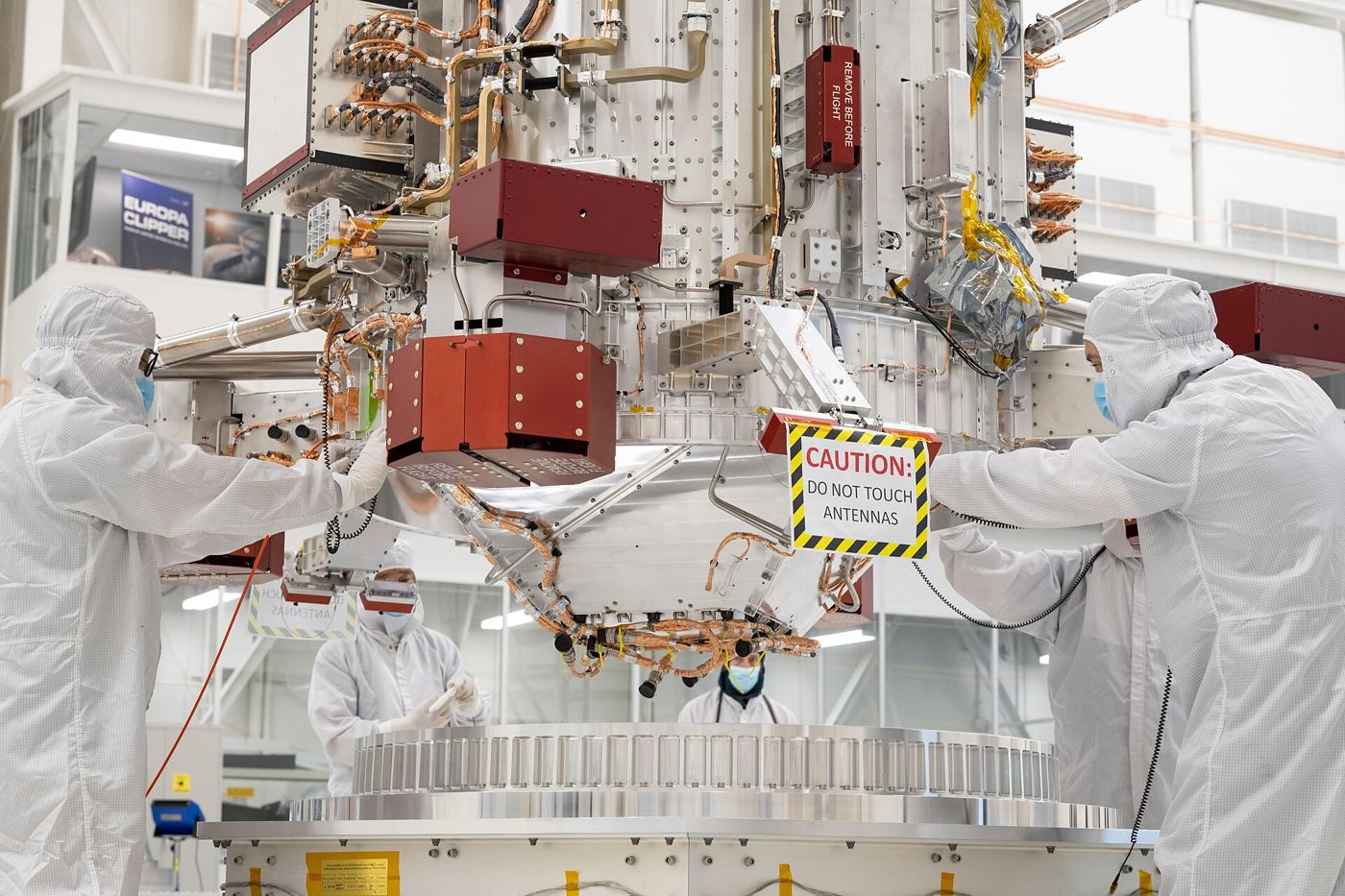
NASA’s Europa Clipper spacecraft will sweep about 3,200 kilometres above Earth on December 3, 2026, borrowing the planet’s speed for the final push toward Jupiter. The flyby is the second and last gravity assist of the mission: the first came at Mars on March 1, 2025, when the spacecraft passed 884 kilometres above the surface and tested its radar and thermal instruments. Launched on a SpaceX Falcon Heavy on October 14, 2024, Clipper is the largest planetary spacecraft NASA has ever built, with solar arrays spanning more than 30 metres. It is due to enter orbit around Jupiter on April 11, 2030, after a journey of about 2.9 billion kilometres.
What the Evidence Shows
The December pass doubles as a dress rehearsal for the science to come. Engineers will use Earth’s magnetic field for the only absolute calibration of the spacecraft’s magnetometer after launch, and the team will run its instruments as it would during a Europa encounter. Europa, a moon slightly smaller than Earth’s own, is thought to hide a salty ocean holding about twice as much water as all of Earth’s oceans beneath its ice shell. Once at Jupiter, Clipper will loop around the planet and dive past Europa about 49 times, some passes as low as 25 kilometres, to judge whether that ocean could support life. The first close Europa flyby is planned for March 7, 2031. Reporting and analysis from sources such as NASA track the same developments, and specialists following Europa Clipper Earth flyby December 3 say the direction is now consistent across independent lines of evidence.
The Wider Context
Funding bodies are watching Europa Clipper Earth flyby December 3 closely because the work sits at the junction of basic curiosity and practical return. Grant panels increasingly ask for a path from discovery to application, while researchers push back that the most valuable uses of fundamental science are rarely the ones written into the original proposal. The tension is productive when both sides stay honest about timescales.
What Happens Next
The long view on Europa Clipper Earth flyby December 3 is that fields advance by accumulation rather than by single announcements. This result adds a solid, checkable piece to a structure many teams are building, and its authors have shared their data so the piece can be tested from every side. That is how the picture eventually becomes reliable enough to act on. You can follow related developments in our coverage of science.
It is also worth remembering how quickly the picture in this area has changed before. Positions that looked settled a few years ago have been revised as new data arrived, and the same humility is appropriate now. The strongest coverage of this subject, and the most useful advice, tends to come from sources that update their views openly when the facts move, rather than defending an earlier position long after it has stopped fitting the evidence available.
