


Business leaders like to talk about bold moves. Launch faster. Hire ahead of demand. Enter a new market before competitors do. These decisions sound decisive. Sometimes they are. Sometimes they are just expensive ways to mistake movement for progress.
High-stakes decisions are not rare in business. They appear in hiring plans, pricing changes, market expansion, product bets, and capital allocation. Each one carries the same tension: act too early and you waste resources; act too late and you lose position.
That is why good operators do not ask only one question. They do not ask, “Is this risky?” Everything meaningful in business carries some risk. The better question is: what kind of risk is this, what is the likely return, and what happens if we are wrong?
This is where strong decision-making separates itself from instinct.
A weak decision process tends to swing between two bad habits. One habit is reckless optimism. The team sees upside and discounts cost. The other is defensive caution. The team protects downside so hard that it blocks growth. Neither approach is stable. One burns capital. The other wastes opportunity.
The goal is not to become fearless or conservative. The goal is to become accurate.
In practice, that means three things. First, know whether the decision is reversible. Second, know how much failure will cost. Third, know whether waiting improves the odds or only delays learning.
Think of business like crossing a river on stones. Some stones are wide and close together. You can move fast and recover if you slip. Others are narrow, wet, and far apart. Those need slower steps. The mistake is not stepping. The mistake is stepping without knowing what kind of crossing you are in.
This article starts with a simple idea: risk is not the enemy in business. Poorly read risk is.
How To Separate Smart Risk From Dangerous Risk
Not all risk is equal. Some risks move the business forward. Others drain it.
The difference is not luck. It is structure.
A smart risk has a clear upside and a controlled downside. You know what you can gain. You know what you can lose. Most important, you can survive the loss. A dangerous risk hides one of these elements. Either the upside is vague, or the downside is larger than it looks.
Start with exposure.
If one decision can damage the company in a single move, it is not a strategic risk. It is a structural weakness. Good operators avoid bets that can end the game. They prefer moves where failure costs time or money, not survival.
Next, look at information.
A smart risk improves your knowledge even if it fails. You launch a feature and learn how users behave. You enter a market and see real demand. A dangerous risk teaches little. It burns resources without giving clear feedback.
Think of it like placing a bet without seeing the board. In online betting on live cricket, timing matters because new data changes the odds every minute. The same logic applies in business. If your decision does not update your understanding of reality, you are acting blind.
Then check reversibility.
Some decisions are easy to undo. Others lock you in. Hiring one engineer is reversible. Building a full team in an untested market is not. The more permanent the decision, the higher the bar for evidence.
Finally, measure alignment.
A smart risk fits your current position. A growing company can take different risks than a fragile one. Context defines what is safe. The same move can be bold in one case and reckless in another.
In practice, strong operators run a quick filter:
- Can we survive failure?
- Will we learn something useful?
- Can we reverse this if needed?
If the answer is no to any of these, the risk is likely dangerous.
When Speed Beats Certainty: Acting Before You Feel Ready
Waiting feels safe. It rarely is.
In fast markets, delay has a cost. Competitors move. Customers adapt. Opportunities decay. By the time you feel certain, the edge is often gone.
Good operators do not wait for full clarity. They wait for enough signal.
Start with timing.
Some decisions lose value if delayed. Market entry is one. Hiring for a key role is another. Product launches in emerging categories also fit here. In these cases, speed creates advantage. Acting early lets you shape the space instead of reacting to it.
But speed without control is chaos. The goal is fast, contained action.
That means you define limits before you move. You set a budget. You set a time window. You define what success looks like. If the signal is weak, you stop. If it is strong, you scale.
Think of it like stepping onto thin ice. You do not run across. You test the surface with short, controlled steps. Each step gives feedback. Each step reduces uncertainty.
Next, focus on feedback loops.
Fast decisions only work if you can measure results quickly. If feedback takes months, speed loses value. You need short cycles. Launch. Measure. Adjust. Repeat. This turns risk into a learning system, not a gamble.
Also, watch for false certainty.
Teams often delay because they want one more report, one more forecast, one more meeting. This does not reduce risk. It only shifts responsibility. At some point, action is the only way to get real data.
The key is simple: move when waiting adds less value than acting.
You do not need perfect information. You need enough to make a controlled move.
When Playing Safe Creates More Value Than Taking Risk
Speed is useful. It is not universal.
Some decisions carry weight that cannot be reversed. In these cases, caution is not weakness. It is discipline.
Start with irreversibility.
If a decision locks capital, reputation, or long-term direction, slow down. Entering a new country with heavy compliance. Acquiring a company. Rebuilding core infrastructure. These moves are hard to undo. Mistakes compound over time.
In these cases, the cost of being wrong is not just financial. It affects trust, focus, and momentum.
Next, consider unclear variables.
If key inputs are unknown, acting fast does not create advantage. It increases noise. For example, launching a product without understanding user demand leads to confused data. You cannot tell if failure comes from the idea or the execution.
Waiting here has value. It allows you to reduce uncertainty before committing resources.
Then, assess system stability.
If your current operations are fragile, adding risk can break them. A company struggling with delivery cannot safely scale demand. A team missing core processes cannot handle rapid expansion. Stability must come first.
Think of it like carrying weight on a narrow path. If your balance is weak, adding speed increases the chance of falling. Strength comes before acceleration.
Also, watch for emotional pressure.
Teams often rush because of external signals. Competitors launch. Investors push. Trends create urgency. These signals feel strong, but they are not always relevant. Acting on them without internal alignment leads to poor decisions.
Strong operators separate signal from noise. They act when the move fits their system, not when pressure rises.
The principle is simple: protect downside when the cost of failure is high and the path is unclear.
In these moments, restraint is not lost opportunity. It is controlled positioning.
A Practical Framework For Balancing Risk And Safety
Good decisions need structure. Without it, teams rely on mood, pressure, or habit.
Use a simple framework that forces clarity before action.
Step 1: Define The Downside In Concrete Terms
Do not say “this might fail.” That is vague.
Ask: what exactly do we lose, and how much?
Money, time, reputation, focus. Put numbers or clear limits on each. If the downside is unclear, you are not ready to decide.
Step 2: Estimate The Real Upside
Avoid inflated expectations.
Ask: what is the realistic gain if this works? Not the best case. The likely case. If the upside is small and the downside is large, the decision is already weak.
Step 3: Check Reversibility
Classify the decision:
- Reversible — can be undone with low cost
- Partially reversible — can be adjusted, but not fully undone
- Irreversible — locks resources or direction
Move fast on reversible decisions. Slow down on irreversible ones.
Step 4: Define The Learning Value
Every action should produce information.
Ask: what will we learn if this works or fails? If the answer is unclear, redesign the action. A good decision improves your future decisions.
Step 5: Set Boundaries Before Acting
Do not rely on discipline in the moment. Set limits in advance.
Define:
- Budget cap
- Time window
- Clear success metrics
This prevents small risks from expanding into large ones.
Step 6: Decide And Commit
Once the structure is clear, act.
Avoid half-decisions. They create drag. Either move with defined limits or do not move at all.
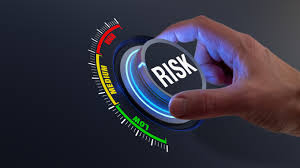
Think of this framework as a control panel. It does not remove risk. It makes risk visible and manageable.
Strong operators use systems like this consistently. Over time, this creates a major advantage. Decisions become faster, cleaner, and more aligned with reality.
Consistent Decision Discipline Compounds Over Time
Single decisions matter. Patterns matter more.
A business rarely fails from one bad call. It fails from repeated weak decisions. The same is true in reverse. Strong outcomes come from consistent, structured choices, not isolated wins.
Decision discipline builds momentum.
You define downside before acting. You test instead of guessing. You move fast when risk is contained. You slow down when stakes are high. Over time, this creates a stable system. Fewer surprises. Fewer large losses. More controlled growth.
The effect compounds.
Small, smart risks generate learning. Learning improves future decisions. Better decisions improve results. Results increase confidence. Confidence supports clearer thinking. The cycle reinforces itself.
This is how strong operators scale.
They do not rely on instinct alone. They build repeatable processes for risk. They treat uncertainty as something to measure, not fear.
Think again of the river.
At first, each step feels uncertain. You test every stone. Over time, you learn how to read the surface. You move faster, but not blindly. You trust the process, not the guess.
That is the real goal.
Not to eliminate risk. Not to chase it. But to read it accurately and act with control.
In high-stakes business decisions, that skill is the difference between growth and regret.
