


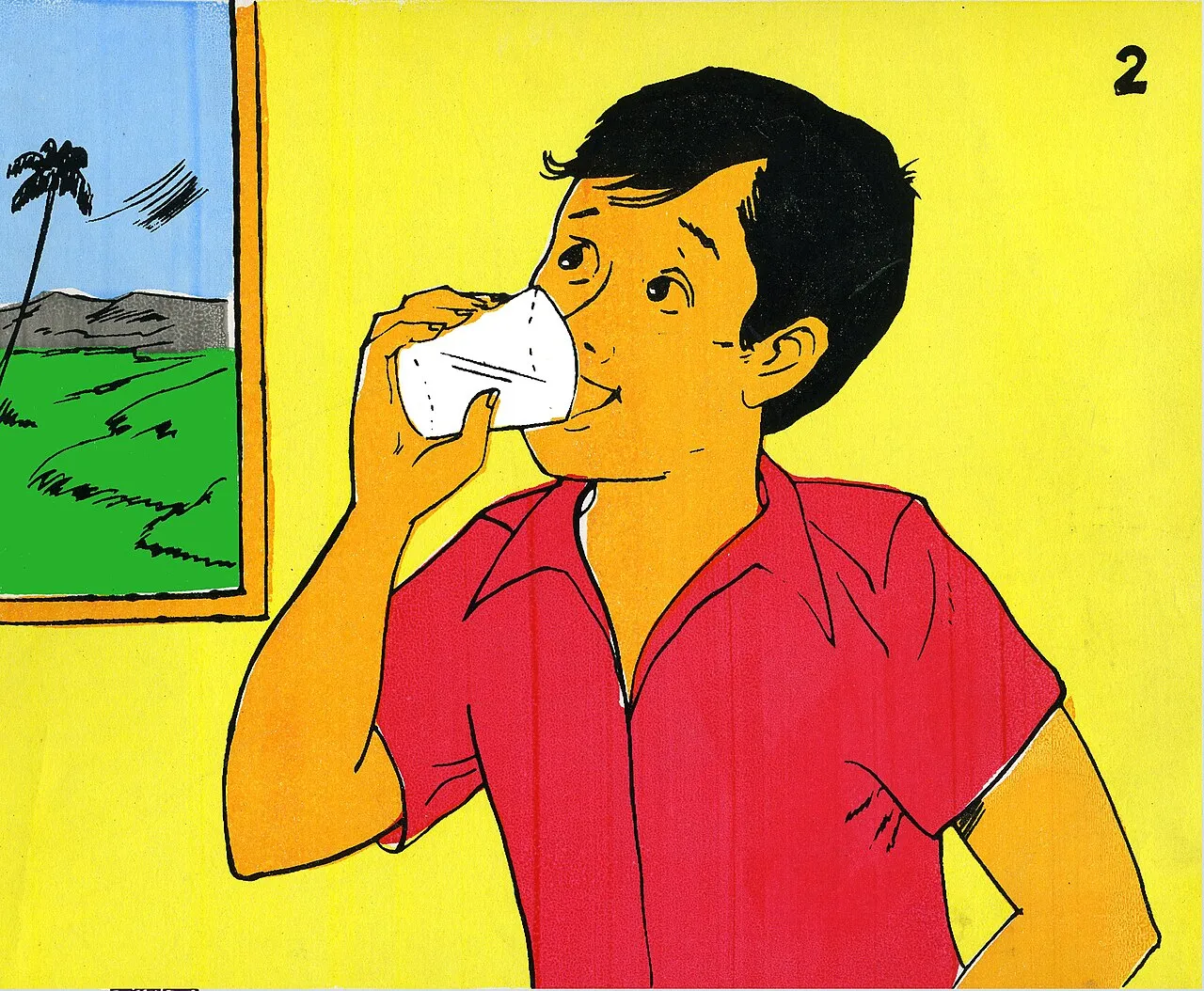
The glass is filled from a tap connected to water that has been tested, treated and certified safe — and the person holding it still does not quite trust it. That small hesitation, repeated in millions of kitchens, is one of the most durable puzzles in public health. A major international survey of 15,000 people across 81 countries recently confirmed what utilities have long suspected: bottled water consumption persists even among people who know the arguments against it, and distrust of the tap sits near the centre of the habit.
Understanding that distrust matters more than scolding it. People are not ignoring the science so much as weighing a different kind of evidence — the taste from their own tap, the colour after roadworks, the memory of a contamination scare in a town like theirs. Our news coverage of the survey returns to a simple point: trust is not produced by test results alone. It is produced, or lost, in kitchens, and any serious attempt to shift the bottled-water habit has to start there.
Taste Is Data, Even When It Is Not Evidence
Ask households why they buy bottled water and taste comes back again and again — the chlorine note, the flatness, the memory of a metallic tang in an old building. Chemically, none of that necessarily signals danger; treatment tastes are often the signature of disinfection working. But taste is the one quality signal drinkers generate themselves, daily, without equipment, and it outranks reassurance from an authority they cannot see. Utilities that dismiss taste complaints as irrational miss the point: from the drinker’s side of the glass, the senses are the laboratory, and its readings are immediate, personal and repeated at every meal.
Pipes, Buildings and the Last Fifty Metres
Distrust also has an address. Even where municipal water leaves the treatment plant in excellent condition, it travels through ageing mains and then through the plumbing of individual buildings — old tanks, corroded fittings, long-unused pipes in schools and offices. A single brown-water incident after maintenance, harmless but vivid, can undo years of clean reporting for an entire street. This is why the trust problem concentrates in particular neighbourhoods and building types rather than spreading evenly, and why blanket national messaging about safe water so often fails: the problem people are describing is frequently local, physical and, from their tap, real.
Scares Cast Longer Shadows Than Statistics
Every country carries its reference scare — a contamination event, a boil-water notice, a scandal about industrial chemicals — and those memories organise how new information is received. After a scare, official reassurance is discounted precisely because officials are the source, and bottled water becomes a private insurance policy: a small, visible payment for certainty. Rebuilding trust therefore takes more than publishing results. The EPA’s drinking-water resources emphasise local reporting and transparency for this reason — ward-level data, promptly explained incidents, and independent testing people can watch happening all rebuild confidence in a way national campaigns cannot.
What Actually Wins People Back to the Tap
The places making progress share a recipe: make tap water taste better, prove it constantly, and make the proof easy to find. Chilled public refill points, filters in schools, real-time local quality dashboards and honest, fast communication when something goes wrong all treat trust as infrastructure — something built and maintained, not announced. The survey’s deepest lesson is that awareness was never the bottleneck; people already know the arguments about plastic and cost. What they are waiting for is a reason to believe their own tap. Give them that, at their own sink, and the bottle habit finally has competition.
For readers wondering what to do with all this at home, the honest answer is undramatic. Check your local water report — it is more specific and more reassuring than national arguments. If taste is the barrier, a simple filter or a night in the fridge often removes the chlorine note that drives the doubt. And if your building’s water ever looks or smells wrong, report it and use bottled water until it is explained; that is what the safety system is for. Trust, rebuilt one clear glass at a time, is how the bottle habit finally ends.
