


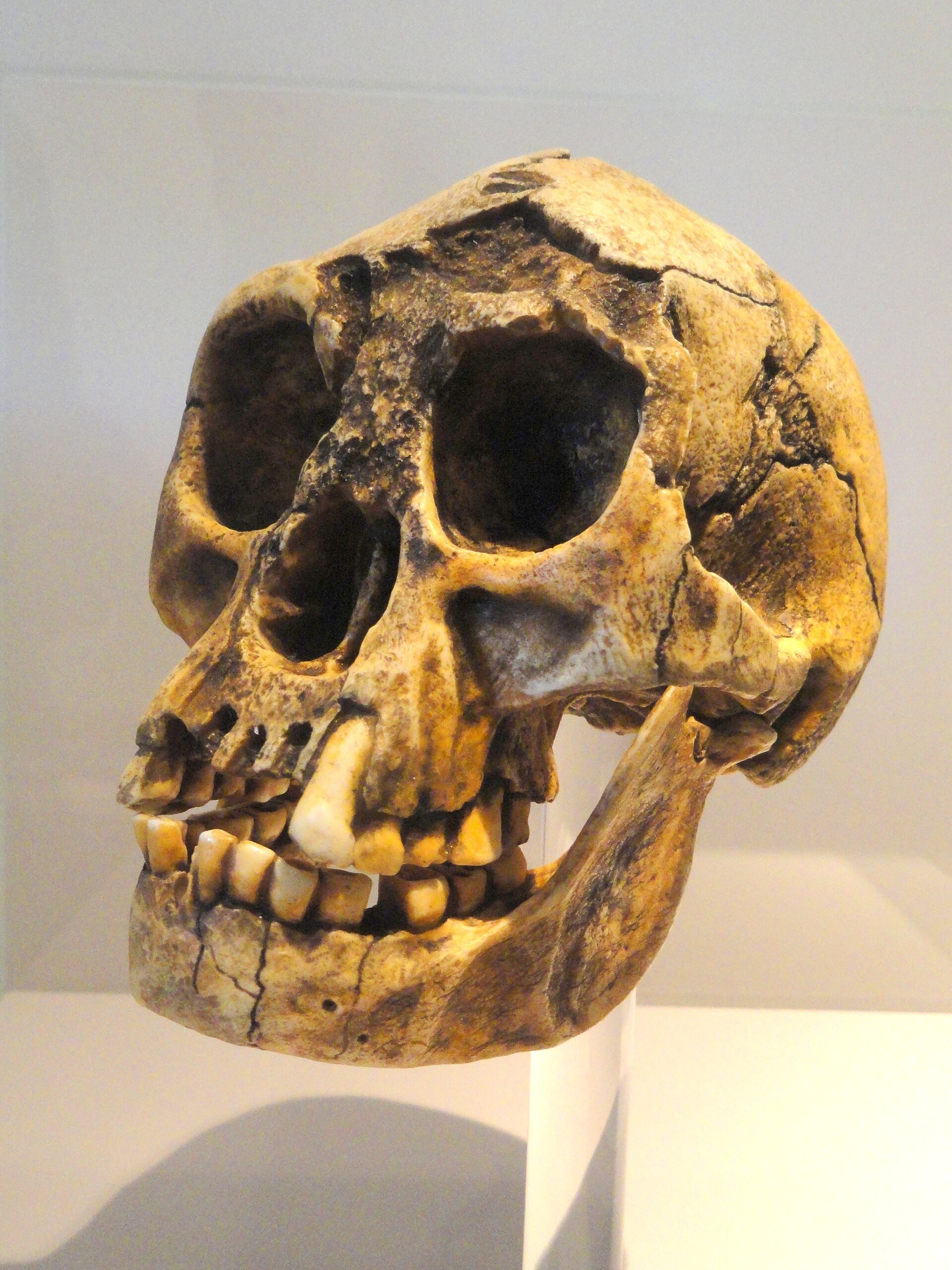
The human brain is evolution’s masterpiece and its compromise. The organ that produced language, mathematics and medicine is also prone to anxiety, depression, addiction and dementia on a scale no other animal experiences. A growing body of evolutionary thinking, explored in our health and wellness coverage, argues this is no coincidence: the very design features that made human cognition so powerful are the ones that make it fragile. We were, in a meaningful sense, set up for failure by our own success.
Built by shortcuts, not by blueprint
Evolution does not engineer from scratch; it tinkers. The human brain expanded rapidly — roughly tripling in size over a few million years — by layering new capacities onto far older circuits rather than redesigning them. Emotion, memory and reward systems that evolved for immediate survival were retained and then wired into a vastly enlarged cortex built for planning and abstraction. The result works brilliantly, but it is a patchwork, and patchworks have seams.
Those seams show up as systematic biases. A threat-detection system tuned to err on the side of alarm — useful when a rustle might be a predator — becomes, in a safe modern environment, a generator of chronic anxiety. A reward system calibrated for scarce food and rare opportunity becomes, amid engineered abundance, a driver of overeating and addiction. The machinery is not broken; it is running exactly as selected, in a world it was never selected for.
The high price of a big, hungry brain
Size itself creates vulnerability. The brain consumes around a fifth of the body’s energy despite being a fiftieth of its mass, and its densely connected neurons are exquisitely sensitive to disruptions in blood supply, temperature and chemistry. Human neurons also live extraordinarily long lives — many must function for eight or nine decades without replacement. That longevity, combined with the metabolic cost of constant activity, helps explain our susceptibility to neurodegenerative diseases such as Alzheimer’s, which have no real equivalent in shorter-lived species.
Development adds another trade-off. Human childhood is famously prolonged because the brain needs years of experience to wire itself, and that extended plasticity is what makes learning, culture and language possible. But the same slow maturation leaves long windows in which development can go awry, contributing to conditions such as schizophrenia and autism that researchers increasingly understand as disorders of brain development and connectivity. An overview of the organ’s structure and functions from Encyclopaedia Britannica underlines just how interdependent those systems are.
Why ageing exposes the design
Natural selection optimises for reproductive success, not for indefinite durability. Systems that perform superbly at twenty may simply never have been selected to perform at eighty. As lifespans have stretched far beyond historical norms, more people live long enough to meet the failure modes — vascular damage, protein accumulation, shrinking processing speed — that evolution never had reason to engineer away. Research collected through Nature’s neuroscience coverage increasingly frames dementia not as a single disease event but as the late-life exposure of lifelong design constraints.
Mental health follows the same logic. The capacity to simulate the future enables planning — and rumination. Social cognition enables cooperation and empathy — and devastating sensitivity to exclusion and shame. Consciousness of mortality motivates achievement — and existential dread. Each celebrated human faculty casts a clinical shadow, which is why the same genes and circuits keep appearing in studies of both high achievement and psychiatric risk.
Living well in a compromised brain
None of this is a counsel of despair; it is a maintenance manual. Brains built with our trade-offs respond predictably to sleep, exercise, social connection and cognitive use, all of which support the vascular and metabolic systems the organ depends on. Knowing that anxiety is an overprotective alarm rather than a personal defect changes how people respond to it. Knowing that reward circuits are easily hijacked argues for designing environments, not just exercising willpower.
The honest summary is that evolution gave humans a brain optimised for flexibility in a changing world, paid for with fragility across a long life. Understanding that bargain — covered regularly on our homepage — does not diminish the achievement. It explains both the brilliance and the breakdowns, and it points to the realistic goal: not a brain without failure modes, but a life structured to keep them at bay for as long as possible.
