


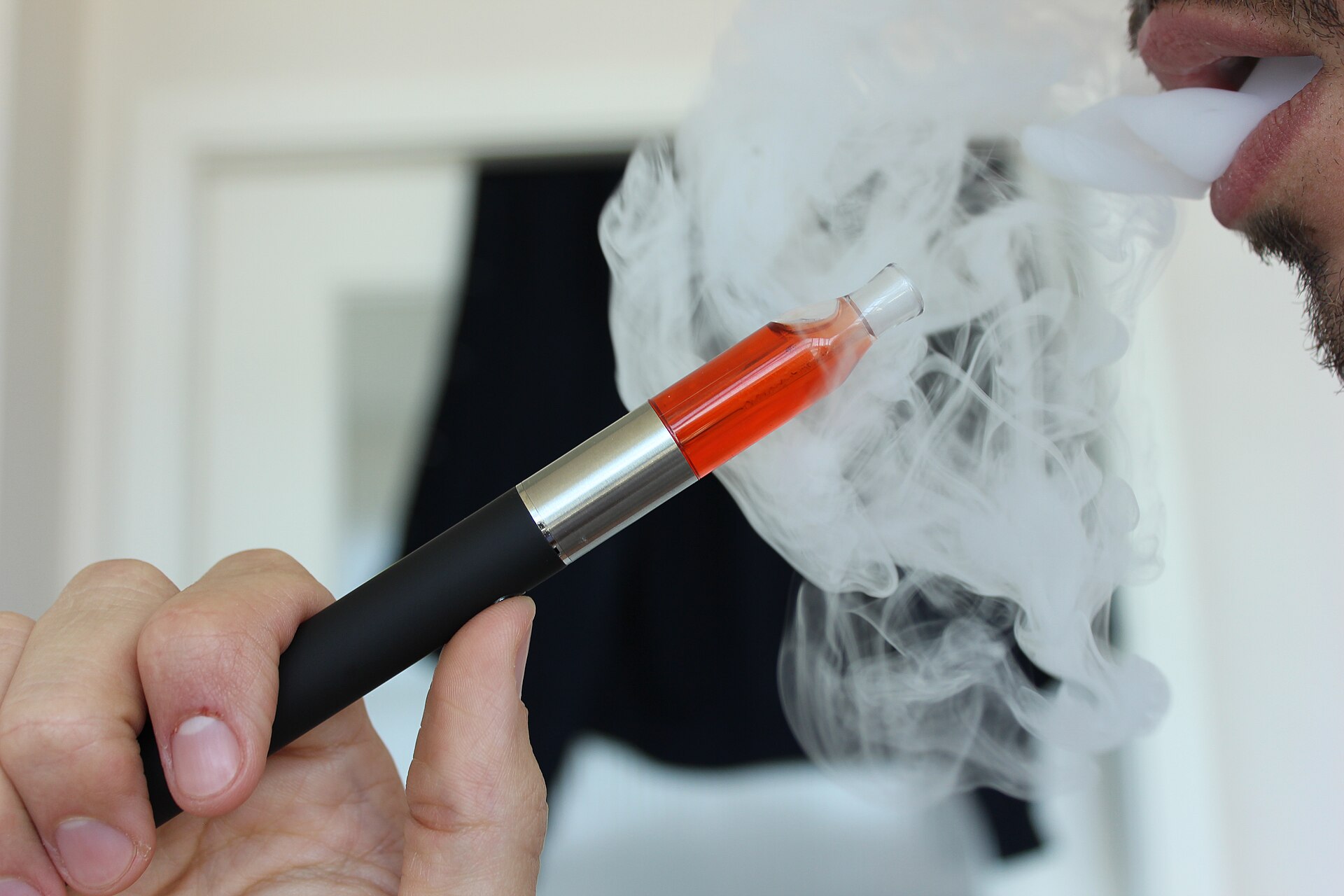
From an operator’s point of view — the clinician watching patterns across thousands of patients — the vaping question that matters most is practical: a smoker has quit using an e-cigarette, so what should they expect for their lungs? The evidence assembled so far supports guarded reassurance. Compared with the cigarettes they replaced, e-cigarettes expose users to far fewer carcinogens. But the long-term cancer data that would let anyone declare vaping itself safe will not exist for many years, and responsible coverage should say so plainly.
The engineering difference explains much of the toxicology. Burning tobacco generates smoke containing tar and a long catalogue of established carcinogens. A vaping device heats a liquid — nicotine, flavourings, propylene glycol and glycerine — into an aerosol without combustion. The World Health Organization cautions that the resulting emissions still contain toxicants, that nicotine sustains addiction, and that marketing and flavours have driven worrying uptake among adolescents who never smoked.
The evidence gap is a matter of calendar
Lung cancer develops slowly, typically over two or three decades of exposure. Population-scale vaping began around the early 2010s, which places us barely halfway through the observation window epidemiologists need. Cohort studies are in progress, and registries will eventually show whether exclusive long-term vapers develop lung cancer at rates above never-users — but that answer belongs to the 2030s as much as to today. Our magazine’s science desk applies the same patience to other slow-moving stories featured on our homepage.
While the cohort data matures, laboratory findings carry the argument. Aerosol analyses detect formaldehyde and other carbonyls under high-temperature conditions, metallic particles from coils, and flavouring agents with questionable inhalation profiles. Experimental work shows inflammation and DNA strand breaks in lung cells exposed to vapour. None of this proves human cancer causation; all of it argues against describing vapour as benign.
Interpreting the ex-smoker studies
The human literature is dominated by former smokers, whose prior tobacco exposure is itself the strongest predictor of lung cancer. A 2024 study that found higher lung cancer incidence among quitters who used e-cigarettes drew global headlines, then careful qualifications: researchers lacked precision on each participant’s lifetime smoking dose, and heavier ex-smokers — who face higher risk regardless — may both vape more and develop more cancer.
Institutions such as the National Cancer Institute therefore maintain that it is unknown whether e-cigarette use causes lung cancer, while continuing surveillance. Cancer charities phrase the consensus for the public as: substantially less harmful than smoking, certainly not harmless, long-term effects still being mapped.
Where the benefit is won or lost
Clinical guidance converges on one operational point: the health dividend comes from eliminating smoke. Former smokers who switch fully see rapid falls in carcinogen biomarkers. Dual users, who vape and continue smoking, retain most of the old exposure and blunt the dividend badly. That is why cessation services that endorse vaping at all present it as a complete substitute and a stepping stone to nicotine-free living.
Our editorial bottom line
There is, finally, a documentation point that clinicians raise and articles rarely do. Because vaping histories are seldom recorded in medical records with the same care as pack-years of smoking, tomorrow’s researchers may inherit data almost as muddy as today’s. Patients who have switched can help by telling their doctors plainly what they used, for how long and what they use now; that history shapes screening decisions today and evidence quality tomorrow. It is a small, practical step that costs nothing. In a field where the central problem is the slow accumulation of clean information, it may be one of the more useful contributions an individual reader of an article like this one can actually make.
For readers who quit smoking with an e-cigarette, the fair summary is this: you have taken the most consequential step available, and current evidence indicates your carcinogen exposure has fallen sharply. The prudent next step, when you are ready, is to taper off vaping too, since its decades-long safety is unproven. Any personal concern — a lingering cough, breathlessness, questions about screening or quitting support — should be taken to a doctor or another healthcare professional. General reporting, including this article, cannot substitute for individual medical advice.
