


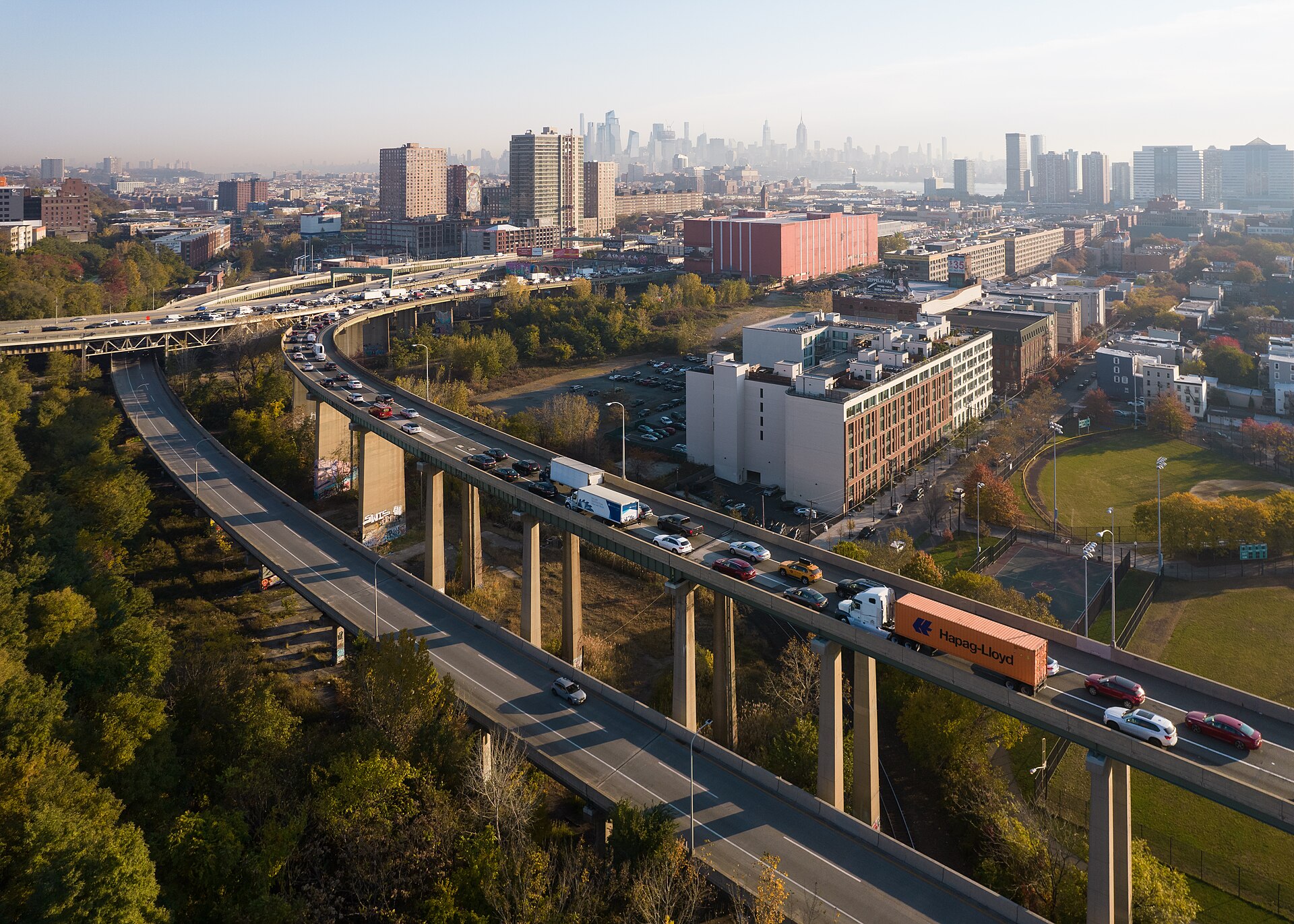
Every city has a traffic problem it cannot rehearse. Close a bridge, retime a hundred junctions or reroute buses around roadworks, and the consequences only become clear once real drivers are stuck in them. A growing number of city authorities are therefore building digital twins: live computer replicas of their road networks that can test a decision in simulation before anyone commits to it in concrete and tarmac.
The idea has moved quickly from research project to procurement line. What changed is the quality of the data feeding the models, as we noted on our home page: connected buses, camera networks, navigation apps and roadside sensors now report conditions continuously, allowing a twin to mirror the city as it is this morning, not as a survey described it last year.
How a twin earns its keep
The strongest results so far come from unglamorous uses. Signal timing adjusted in simulation, then deployed at real junctions, has been credited by several cities with meaningful reductions in delays on busy corridors, though the size of the gain varies with local conditions. Twins are also used to plan around disruption: when a major road must close, modelling the diversion in advance beats discovering the bottleneck on the first Monday morning.
Bus priority is another practical winner. Because buses carry their own tracking data, a twin can show precisely where services lose time and test whether a new bus lane or smarter signals would help. Transport analysts writing for outlets such as The Guardian have observed that such evidence makes politically difficult schemes easier to defend, because the trade-offs are visible before the argument starts.
The business behind the mirror
For vendors, traffic twins are attractive because they are subscriptions, not one-off projects: the model must be fed, updated and revalidated as the city changes. That recurring model explains the competition among mapping firms, telecoms operators and specialist simulation companies to become a city’s default mirror, a contest followed closely in our business reporting.
Cities, for their part, are learning to ask for the boring clauses: data portability, open interfaces and the right to audit the model’s predictions against reality. A twin that cannot be checked becomes an expensive opinion. Contracts increasingly include accuracy benchmarks, with payment linked to how well predicted journey times match measured ones after a scheme is introduced.
Limits and blind spots
A model is only as honest as its inputs, and traffic data has biases. App-based measurements over-represent car journeys and undercount walking, cycling and trips by people without smartphones. If a twin optimises for what it can see, it can quietly make the city worse for everyone it cannot. Responsible authorities are supplementing digital feeds with traditional counts and community consultation.
Privacy needs equal care. Systems designed to track flows should not become systems that track individuals, and the better deployments aggregate data aggressively and publish their retention policies. The Reuters technology desk has reported growing scrutiny of urban surveillance generally; traffic twins that cannot explain their data handling in plain language will struggle to keep public consent.
Freight is an early proving ground for the same ideas. Delivery fleets generate dense, well-instrumented journey data, and logistics firms are building their own twins of the corridors they use most, sometimes sharing findings with city authorities whose models benefit from the detail. Where public and private mirrors overlap, both sides learn faster than either would alone, and the argument for shared data standards grows stronger with every scheme.
The digital twin will not abolish congestion, because no software can repeal the geometry of too many vehicles in too little space. What it can do is make a city’s choices less blind. Decisions tested against a living model will still sometimes be wrong, but they will be wrong less often, and for reasons the city can examine afterwards.
